Development connects the customer's product expectations with garment construction, technical preparation and manufacturing feasibility.
Once the product direction is defined, the next challenge is to transform it into a clear and reliable garment construction.
Development is where product intention meets industrial reality. The objective is to prepare a solution that respects the brief while remaining coherent with materials, construction, quality and manufacturing requirements.
The development stage brings together product information, garment construction and manufacturing considerations.
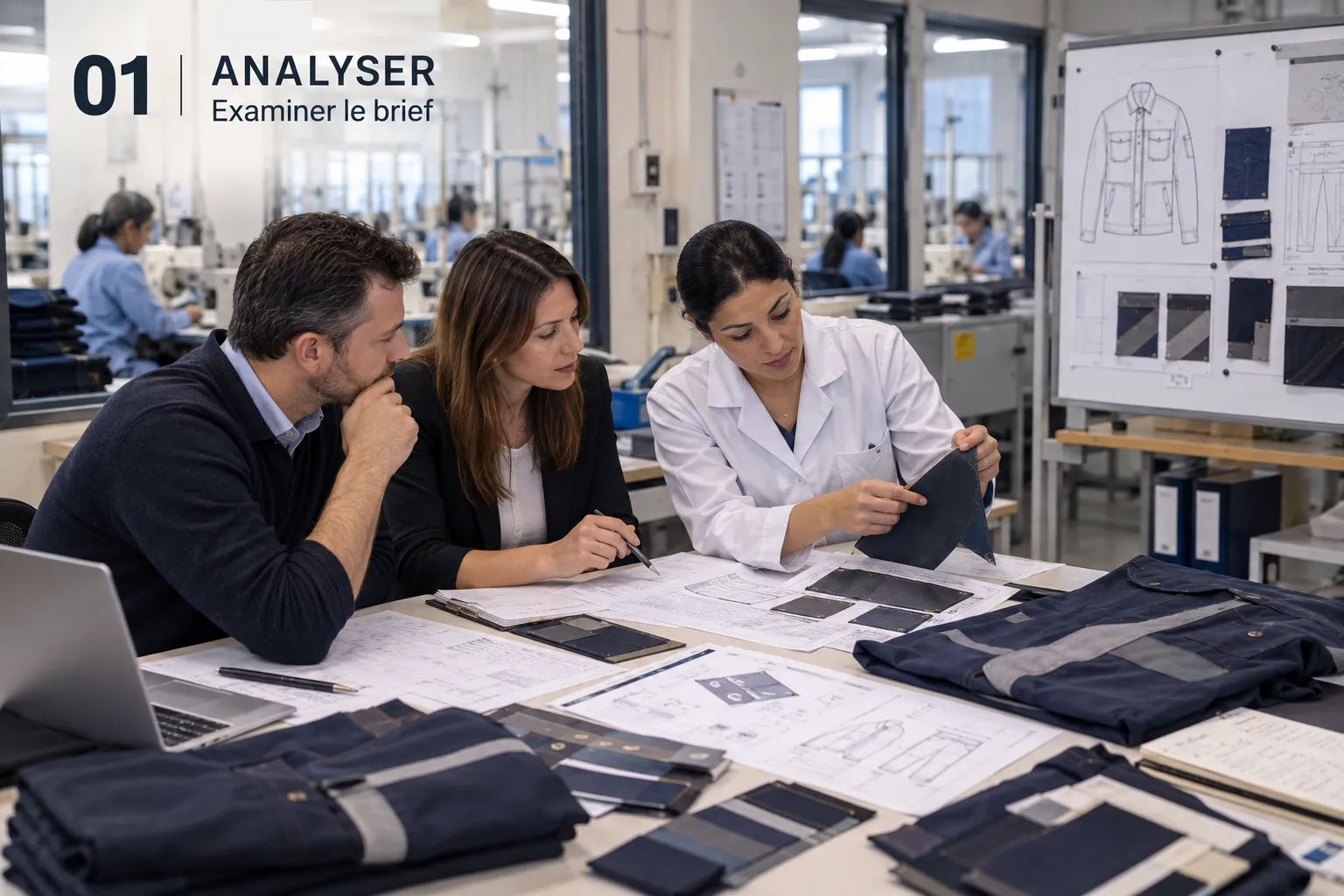
Requirements · reference garment · use · priorities
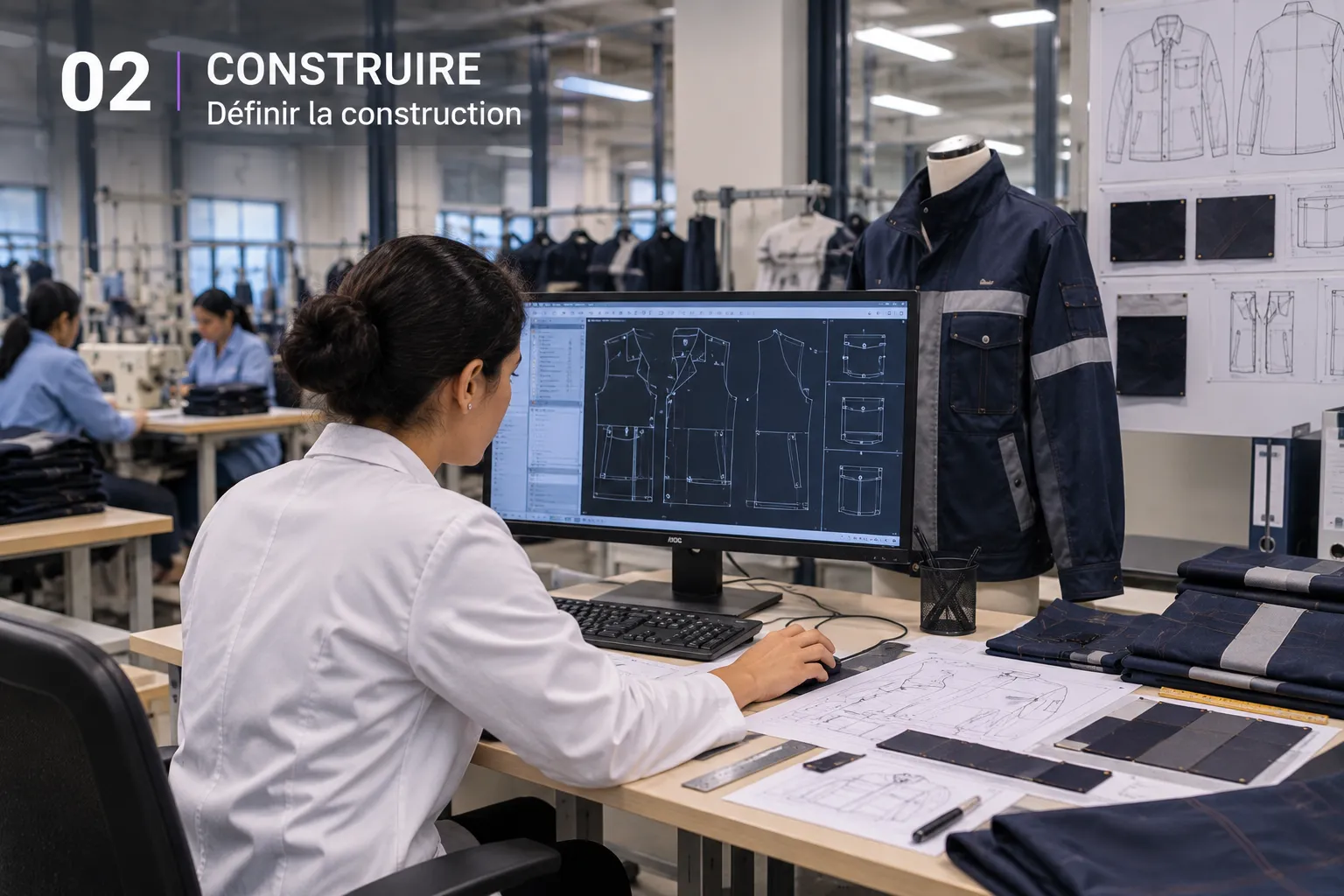
Architecture · pattern logic · pockets · assembly sequence
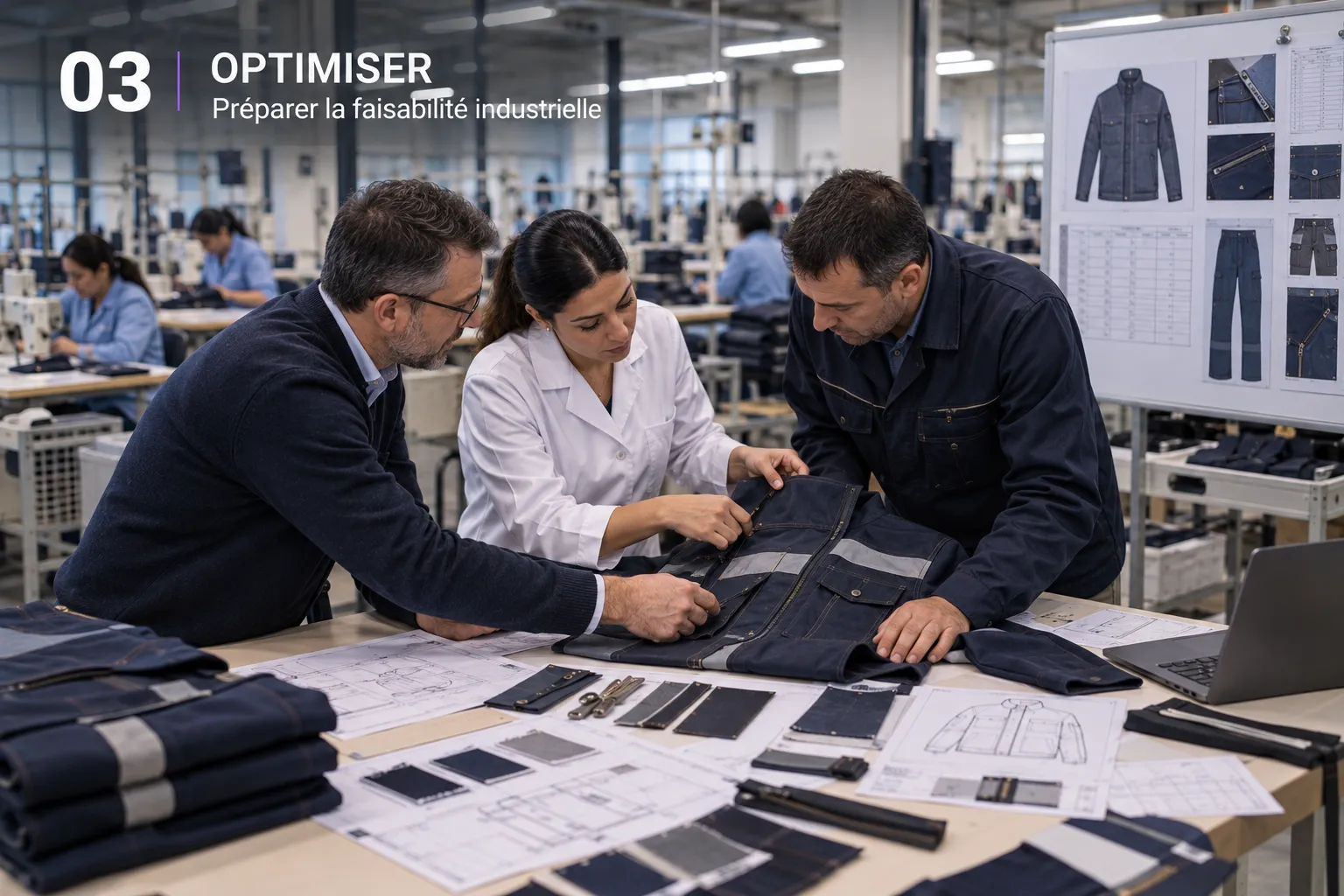
Methods · quality points · efficiency · repeatability
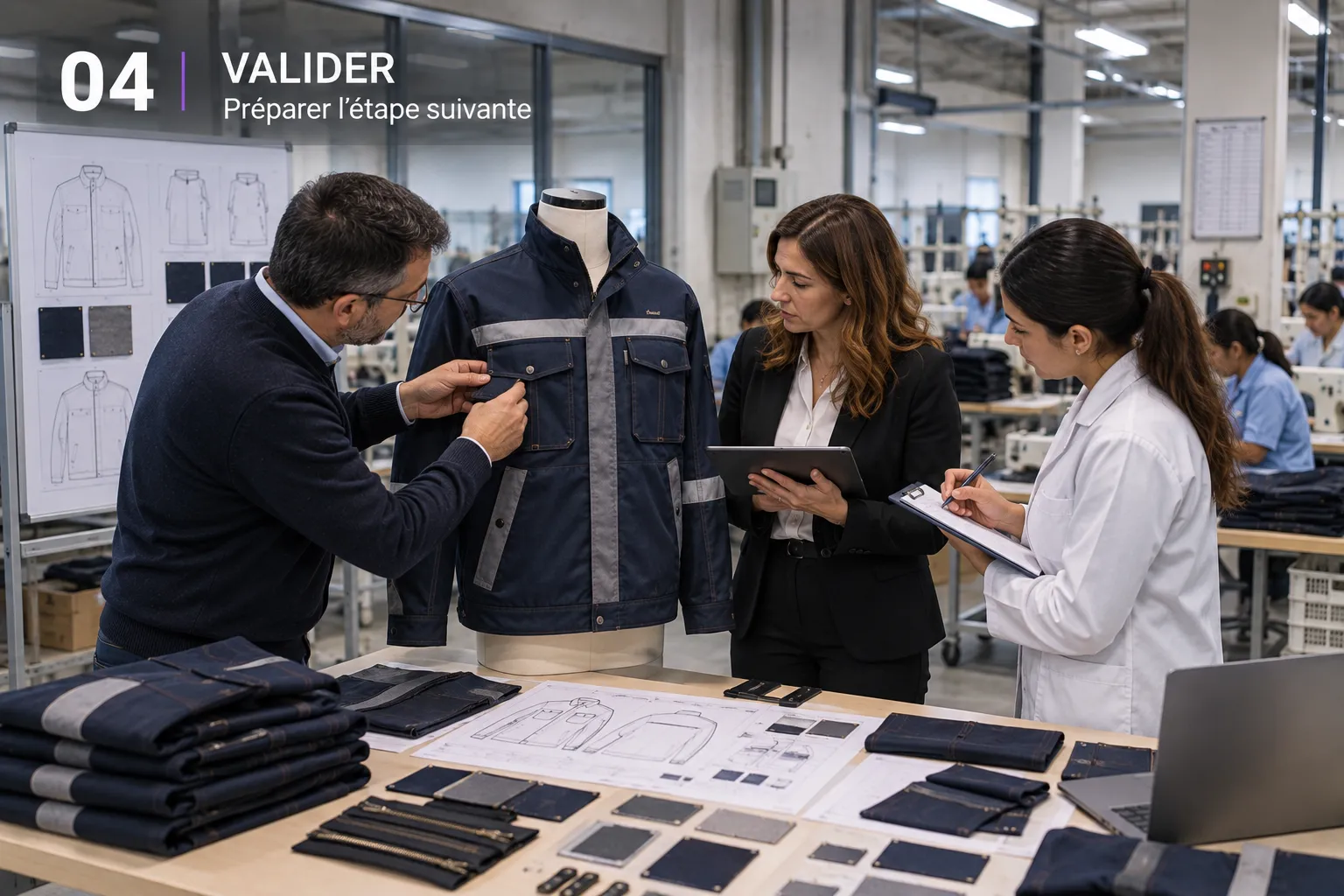
Reference piece · adjustments · approval · readiness
Pockets, seam construction, ergonomic zones, closures, trims and reinforcement placement all affect how the product performs and how it can be manufactured.
Technical information, construction choices and prototype fit are checked progressively so that adjustments are made before industrial execution.
A technically attractive garment is not enough. The construction also needs to support consistent production, quality control and the expected commercial positioning.
The objective is to reduce uncertainty before the product moves further into the industrial process.
 L'expertise qui vous accompagne